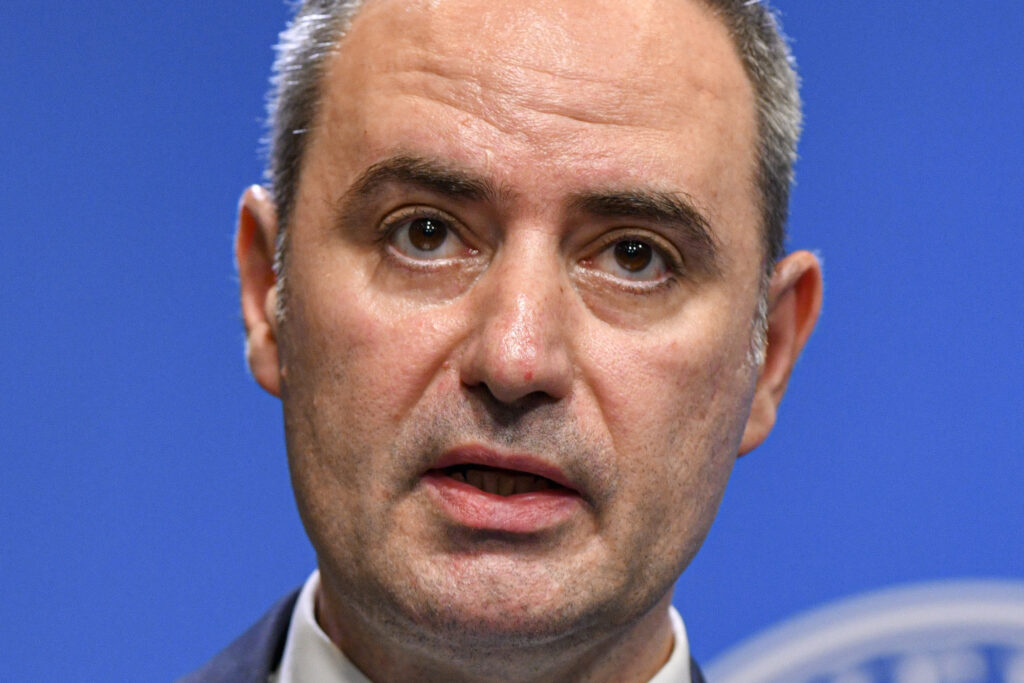
In a Facebook post on Tuesday, Nazare shows that Romania’s 10-year borrowing rate has risen rapidly to 7.3% in recent days, from approximately 6.7% in mid-April, in the context of the deterioration in the perception of investment media generated by internal tensions.
„There are clear signals that political instability is already starting to be included in the cost of financing,” says the Finance Minister.
He points out that a relevant recent development is the difference between the yields on 10-year government bonds issued in local currency by Hungary and Romania: “if at the beginning of the year Romania was below Hungary, now it pays 120 basis points (1.20%) above Hungary. Romania is practically borrowing more expensively than Hungary in the long term, with investors demanding a higher interest rate to compensate for the perceived risk.”
At the same time, the minister adds, rating agencies are closely following local developments and are demanding clarity on the fiscal direction, reforms and the state’s financing capacity, after having warned on numerous occasions that the deterioration of fiscal discipline and the blockages in reforms could put pressure on Romania’s sovereign rating.
“A possible worsening of the country rating (moving to the Junk category) would have serious consequences, meaning significantly higher financing costs, reduced demand and more difficult access to external markets, with a large part of current institutional investors being forced to stop buying Romanian government bonds and even reduce their exposure to Romania,” Nazare wrote on the social network.
He claims to have conveyed to Fitch representatives on Monday that Romania maintains its commitment to fiscal consolidation and reforms, “but all of this will continue to depend on the stability guarantees that we will manage to transmit abroad.”
“For a country with the largest deficit in the EU and with a rapidly growing public debt (from 54.8% to 59.3% of GDP in one year), any increase in financing costs matters,” says Alexandru Nazare.
He also says that Romania still has approximately 10 billion euros to attract from the PNRR by August 31, 2026, and important milestones are still unmet: “Any political blockage directly affects the ability to complete reforms and secure these funds.”
„In this context, the essential difference is not between majorities that can ally, but between majorities that can guarantee. The economy needs continuity, fiscal discipline and credibility – not blockages. When interest rates rise, debt must be stabilized, and the rating is under pressure, any signal of instability immediately turns into costs. Higher for the state, higher for the economy, higher for every Romanian. Therefore, the real stake is not a political one, but one of national responsibility: the capacity to guarantee the country’s financing, to complete the reforms, to maintain investor confidence and to keep the sovereign rating at investment grade level. This is, in reality, the guarantee of financial stability that Romania needs now”, adds the Minister of Finance.